Singularity
Charcoal, ink, acrylic
2021
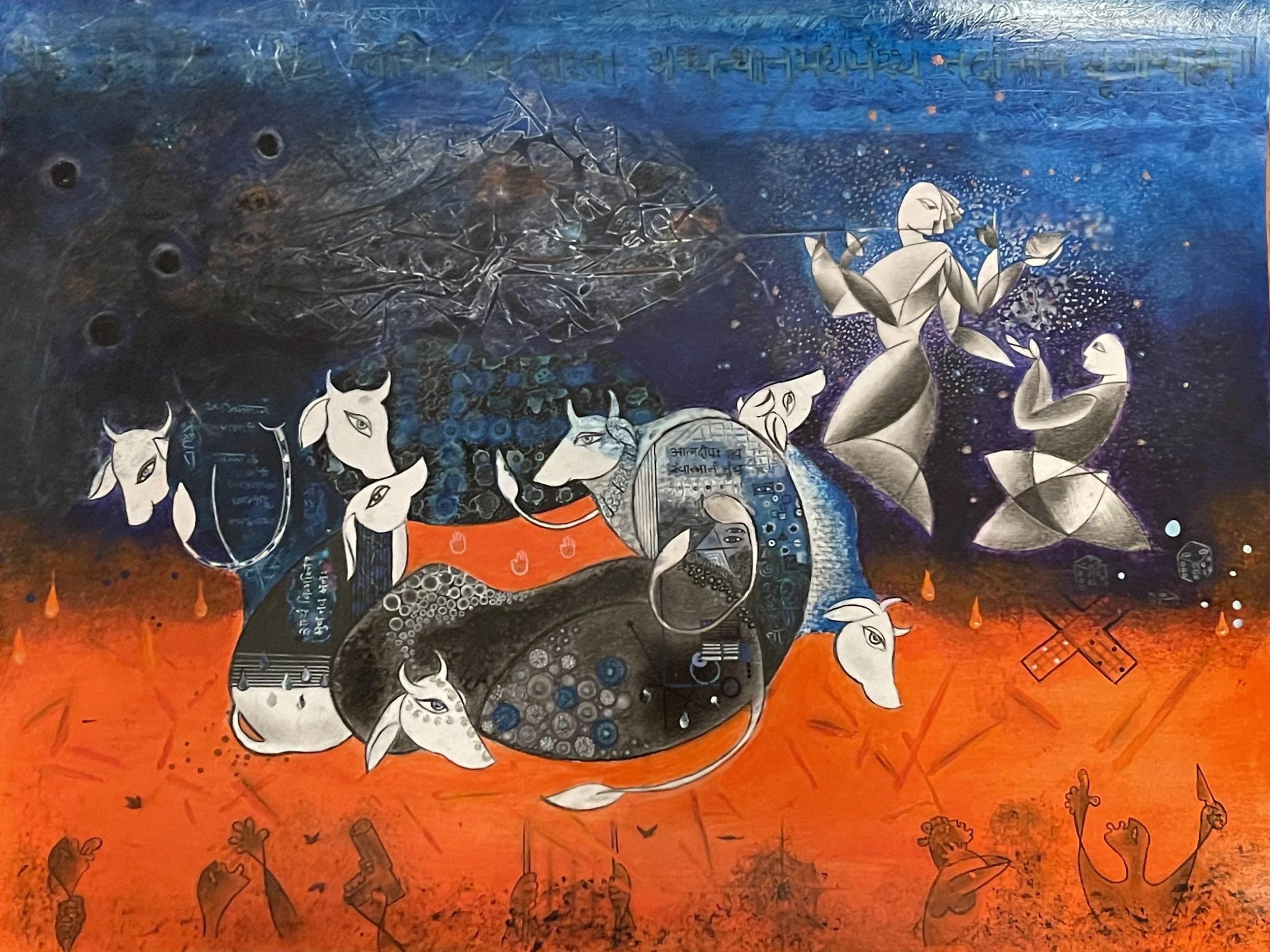
Creation and destruction echo the cyclical philosophies of the Bhagavad Gita (from the Indian epic Mahabharata), which greatly influenced Robert Oppenheimer, the creator of the atomic bomb. At the bottom of the painting, the red color symbolizes the destructive potential of humanity, while the deep blue color of the cosmos symbolizes regeneration. Sacred cows guide us between the realms of destruction and creation - cows personify the selfless nature of mother earth.
The game of dice in Mahabharata is a catalyst of the great war - this game later known as Pachisi in India curiously is strikingly similar to Mesoamerican game Patolli (Nahuatl for “bean”). At the top is a famous Sanskrit verse from the Bhagavad Gita (chapter 4, verse 7) on the restoration of virtue (Dharma), whenever and wherever there is a rise in unrighteousness.
La creación y la destrucción evocan las concepciones cíclicas del Bhagavad Gita —parte de la epopeya india Mahabharata—, que influyó profundamente en Robert Oppenheimer, el creador de la bomba atómica. En la parte inferior de la pintura, el rojo simboliza el potencial destructivo de la humanidad, mientras que el azul profundo del cosmos representa la regeneración. Las vacas sagradas nos guían entre los ámbitos de la destrucción y la creación, y personifican la naturaleza generosa y desinteresada de la Madre Tierra.
El juego de dados del Mahabharata es el detonante de la gran guerra. Este juego, conocido posteriormente en la India como pachisi, guarda una sorprendente semejanza con el juego mesoamericano patolli, cuyo nombre significa «frijol» en náhuatl. En la parte superior aparece un célebre verso en sánscrito del Bhagavad Gita —capítulo 4, verso 7— sobre la restauración de la virtud, o dharma, cuando y donde aumenta la injusticia.